
Table of Contents
1) Skild AI Raises $1.4B, Valuation Jumps Past $14B
Skild AI raises $1.4B| Weekly Robotics News | The Bolt and the Byte
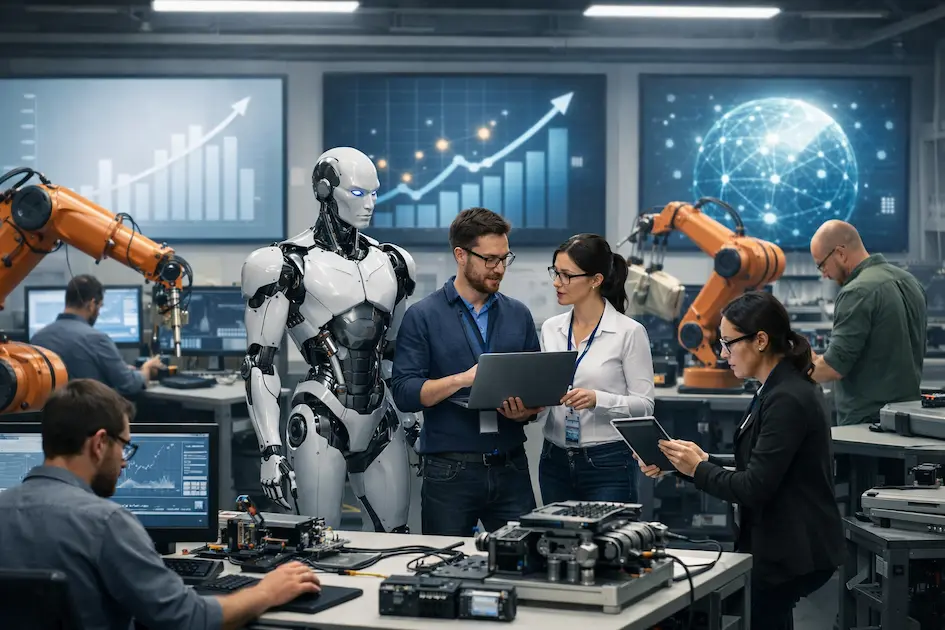
Skild AI announced a $1.4B funding round that values the company at over $14B, signaling huge investor appetite for “physical AI” and robotics-focused foundation models.
The round matters because advanced robot intelligence is increasingly viewed as a platform layer—similar to how large AI models reshaped software. If Skild can translate capital into real deployments, it could accelerate commercialization across industrial automation, logistics, and mobile manipulation.
Key points
- Mega-round highlights renewed confidence in scalable robotics AI.
- Puts pressure on competitors to prove real-world traction.
- Could speed up partnerships with hardware and integrators.
2) China Debuts Deep-Sea Drilling and In-Situ Monitoring Robot

China Debuts Deep-Sea Drilling and In-Situ Monitoring Robot | The Bolt and the Byte
China introduced what it describes as its first deep-sea drilling and in-situ monitoring robot, aimed at supporting undersea exploration and scientific sampling in harsh environments.
Deep-sea robotics is a demanding proving ground: pressure, low visibility, and remote operations require robust autonomy and sensing. Progress here often translates to stronger industrial inspection robots, subsea maintenance systems, and advanced teleoperation tooling.
3) China Unveils Undersea Drilling Robot for Deep-Sea Exploration Push

China Unveils Undersea Drilling Robot | Weekly Robotics News | The Bolt and the Byte
A separate report details China’s broader goal to use an undersea drilling robot to strengthen deep-sea exploration capability, emphasizing practical engineering systems rather than lab-only prototypes.
The significance for robotics is the same trend seen on land: specialized robots are being built as “tools with autonomy,” combining rugged hardware with targeted intelligence and mission planning. These systems can drive improvements in underwater perception, manipulation, and reliability standards.
4) RoboSense Robot LiDAR Shipments Surge in 2025
RoboSense Robot LiDAR Shipments Surge| Weekly Robotics News | The Bolt and the Byte
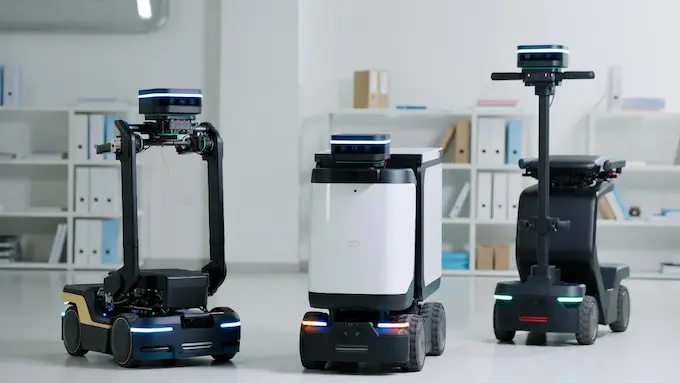
RoboSense reported a major ramp in LiDAR shipments tied to its robot sensing push, pointing to rising demand for perception hardware beyond automotive—especially for service robots and industrial automation.
LiDAR remains a key enabler for safer navigation and mapping, particularly in dynamic environments like warehouses, campuses, and public facilities. More volume also tends to reduce unit costs, which can accelerate adoption of autonomous machines across price-sensitive markets.
5) Hyundai Motor Group Highlights AI Robotics Momentum at CES 2026
Hyundai signals continued investment in AI robotics ecosystems.| The Bolt and the Byte
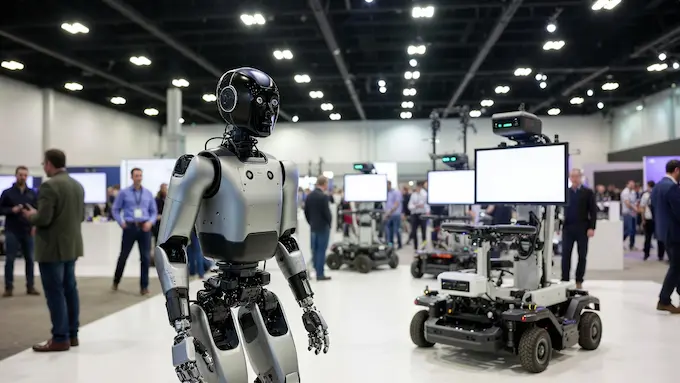
Hyundai Motor Group outlined multiple AI and robotics initiatives tied to its CES 2026 presence, framing robotics as a long-term pillar alongside mobility and automation.
Large manufacturers entering deeper into robotics matters because they can bridge R&D with production-grade engineering, supply chain muscle, and real deployment environments. That combination can speed up the “prototype-to-product” cycle in areas like factory automation, smart logistics, and autonomous mobility platforms.
6) Hyundai’s MobED Mobility Platform Targets Next-Gen Adaptable Robotics
MobED-style platforms aim to speed deployment across use cases | Weekly Robotics News | The Bolt and the Byte
Hyundai presented MobED, a compact mobility robot platform designed for adaptability and scalability—suggesting a modular base for different autonomous applications.
Platforms like this matter because they reduce the cost of building many robot “end products.” A flexible mobility base can support inspection, last-meter delivery, warehouse assistance, and research prototypes—especially when paired with standardized sensing and compute.
7) LG Showcases Smart Humanoid Robot for Cooking and Laundry Tasks
Consumer humanoids inch toward multi-task assistance | The Bolt and the Byte
LG’s smart humanoid concept focuses on household-style tasks like cooking and laundry, reinforcing how consumer robotics is moving beyond vacuums into multi-function assistants.
The key challenge is reliability: home environments are unstructured, and manipulation tasks demand robust perception, planning, and safe human-robot interaction. Even if early versions remain limited, the direction signals growing competition to “productize” humanoid capabilities for everyday life.
8) Tuya Launches “Aura,” an AI Companion Robot for Pets
Pet companion robots aim to bring AI into everyday routines. | Weekly Robotics News | The Bolt and the Byte
Tuya Smart introduced Aura, positioned as an AI companion robot designed for pet interaction and smart-home integration.
Pet-focused robots are an interesting gateway category: they can deliver “social” value with lower safety and manipulation requirements than humanoids. Success here could normalize always-on home robotics, building demand for better onboard AI, sensors, and privacy-aware design.
9) AGIBOT Expands Into Malaysia With Asia-Pacific Strategy
Expansion strategies reflect rising robotics demand in APAC | The Bolt and the Byte
Regional expansions matter because robotics adoption is heavily shaped by local integrators, regulations, labor economics, and industry demand. Growing presence across APAC can help robotics firms learn faster through deployments and partnerships, especially in manufacturing-heavy economies.
10) VORTEXINFO Shows Autonomous Street-Cleaning Robot at ADSW
Short one-line hook | Weekly Robotics News | The Bolt and the Byte
China’s VORTEXINFO showcased an autonomous street-cleaning robot at Abu Dhabi Sustainability Week (ADSW), highlighting service robots aimed at municipal maintenance.
Street-cleaning automation is a practical use case where robots can deliver consistent coverage and reduce exposure to hazardous conditions. The bigger picture: cities are becoming an important “customer segment” for robotics, alongside warehouses and hospitals.
11) Voice-Controlled Smart Wheelchair Uses ROS-Based SLAM for Indoor Navigation
Assistive autonomy improves mobility through safe navigation. | The Bolt and the Byte
A Scientific Reports paper describes a voice-controlled smart wheelchair integrating ROS-based SLAM (including 2D LiDAR mapping and localization) with a safety-focused navigation framework.
The study emphasizes robustness—handling noisy environments and dynamic obstacles—because assistive robotics must perform reliably in real-world settings. Advances here can spill over into broader human-centered robotics, improving speech interfaces, safe motion planning, and indoor autonomy.
Key points
- Voice interface aims to remain reliable under realistic noise.
- System integrates mapping/localization with safety behavior.
- Demonstrates evaluation in simulation and real environments.
12) Sanofi Details AI, Robotics, and Digital Twins in Drug Manufacturing
Pharma automation increasingly blends robotics with digital twins. | Weekly Robotics News | The Bolt and the Byte
Sanofi describes how AI, robotics, and digital twins are being used across manufacturing and “digital labs,” framing automation as a core lever for faster, more reliable drug production.
For robotics, pharma is a high-value domain where precision, traceability, and quality systems matter as much as raw autonomy. When big manufacturers publish these approaches, it signals that automation is maturing into standardized workflows—not just isolated pilot projects.
13) Arm’s “Physical AI” Robotics Push Raises Questions About Durable Advantage
Chip ecosystems are positioning for the next wave of robotics. | The Bolt and the Byte
An analysis of Arm discusses whether its new focus on “physical AI” and robotics could translate into a long-term licensing and ecosystem advantage as robots demand more efficient compute.
This matters because robotics workloads are spreading from cloud training into edge inference—where power, latency, and cost constraints are strict. If Arm can become a default platform for robot compute stacks, it could shape how autonomy is deployed at scale across consumer and industrial devices.
14) PuppyPi Lets Makers Turn Raspberry Pi Into Real Robot Dog
PuppyPi platform empowers developers to build and program legged robots | Maker Robotics | The Bolt and the Byte
A new Hackster project showcases PuppyPi, an open-source quadruped robot dog platform that lets hobbyists and developers turn a Raspberry Pi into a walk-and-see autonomous robot dog. The guide covers everything from Gazebo simulation and reinforcement learning to real-world deployment of navigation and computer vision functions.
The PuppyPi platform combines a sturdy aluminum frame with multiple servos, a camera sensor, and ROS-compatible middleware — making it an accessible entry point to ROS-based robotics development. Users can train adaptive gaits in simulation before transferring their policies to the physical robot, and even explore multi-robot cooperation experiments.
15) Macroact Highlights AI-Driven Integrated Robotics Solutions
Short one-line hook | Industry Integration | The Bolt and the Byte
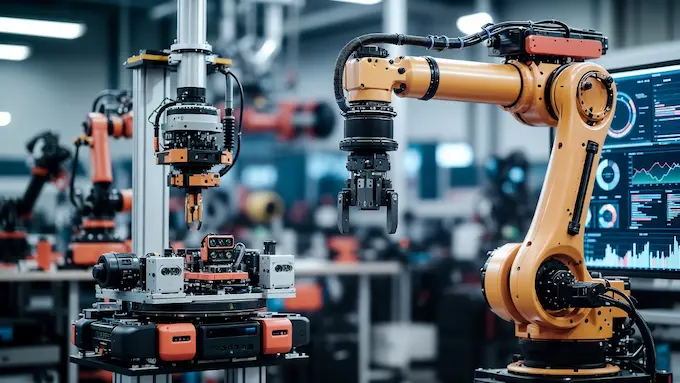
South Korean robotics startup Macroact is gaining attention for its AI-driven integrated robotic systems, which merge artificial intelligence, machine learning, and deep learning to boost automation across industries like smart manufacturing and livestock monitoring.
Macroact’s portfolio emphasizes cohesive solutions that integrate perception, autonomous control, and interaction modules, enabling robots to tackle complex tasks with adaptive intelligence. The company’s approach reflects a broader trend in robotics where deep AI stacks are embedded directly into system design rather than bolted on afterward.
Weekly Robotics News – FAQs
Q1: Why does mega-funding matter in robotics right now?
Big rounds can accelerate hiring, data collection, and deployments—three bottlenecks for turning robotics AI into reliable products. But funding only matters if it converts into measurable real-world performance and customer adoption.
Q2: Are these stories mostly research, prototypes, or commercial products?
It’s a mix: the voice-controlled wheelchair is research with real evaluation, while municipal cleaning robots and regional expansions point to commercialization. “Platform” announcements (mobility bases, compute strategies) often sit in between.
Q3: Which industries are most affected this week?
Manufacturing and logistics remain central, but healthcare/pharma automation and city services are becoming more prominent. Consumer humanoids and home companions are also pushing expectations for multi-task robots.
Q4: How soon could home humanoids do useful daily chores reliably?
Consumer demos show direction, but dependable manipulation in messy homes is still hard. Expect gradual rollout through narrow, supervised capabilities before broad autonomy becomes normal.
Q5: What’s the “boring” technology that still decides success?
Sensors, safety, and integration. This week’s LiDAR scaling and assistive mobility safety design are reminders that reliability often beats flashy demos in real deployments.
Q6: What does undersea robotics signal for the broader field?
Q6: What does undersea robotics signal for the broader field?
Harsh environments force strong engineering: robust autonomy, better sensing, and fault tolerance. Improvements there often carry over into industrial inspection, offshore maintenance, and remote operations.
Conclusion
This week’s weekly robotics news points to a clear pattern: capital and platforms are converging. Mega-funding for robotics AI, expanding robot compute strategies, and modular mobility platforms all suggest the industry is racing to standardize the building blocks of autonomy.
At the same time, real-world deployment is broadening—into cities, homes, pharma manufacturing, and extreme environments like the deep sea. Next week, watch for more evidence of commercialization: pilots turning into contracts, and “physical AI” claims backed by measurable performance.



