
Table of Contents
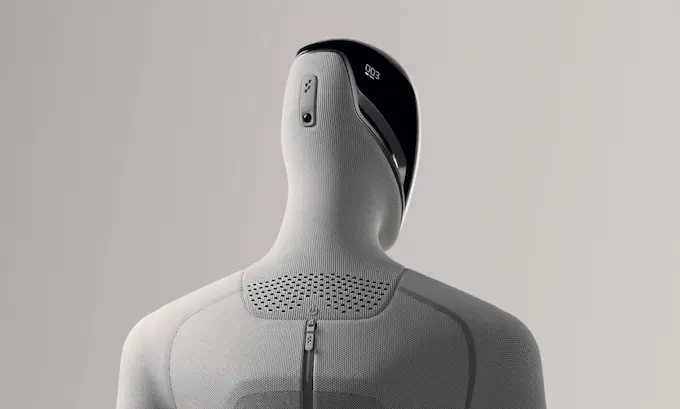
rom sci-fi fantasy to kitchen counters, robotics is stepping up. With Figure 03, Figure AI introduces its third-generation humanoid robot crafted not just for labs or demo stages but for real homes and real tasks. Built around the new Helix AI system, engineered from hardware to shop-floor scaling, Figure 03 aims to move general-purpose humanoids closer to everyday use.
In this article I’ll take you through what Figure 03 is, what it can do, how it’s built, where it may slip, and why this one marks a possible turning point in the future of robotics. If you’re wondering about humanoid robot capabilities, safety, mass manufacturing, or how this compares to previous robots this is your roadmap.
Vision and Ambition of Figure 03 humanoid robot
Figure AI wants more than impressing with robot demos. The goal is to create a general-purpose humanoid a robot that doesn’t just do one task well, but adapts, learns, interacts, helps in both homes and commercial spaces. The shift from prototyping to scaling is at the heart of Figure 03. Instead of piecemeal improvements, Figure AI rebuilt hardware, software, supply chains, and factory capacity in one sweep.
The ambition is rooted in believing that humanoid robots, once they acquire decent dexterity, perception, safety, and cost-efficiency, can become as ubiquitous as smartphones or laptops. That kind of scale matters– it changes economics, utility, the kinds of tasks robots can take on, and who benefits
Helix AI: The Intelligent Core
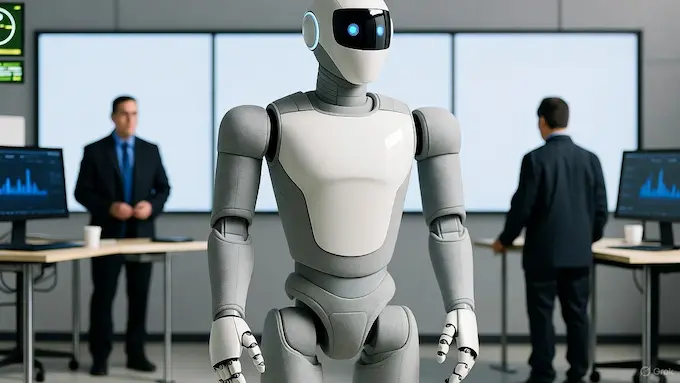
Helix is Figure AI’s in-house vision-language-action (VLA) system. It is built to process what the robot sees, what it is told, and how it should move in response.
- Visual perception is upgraded: Figure 03’s camera architecture runs at twice the frame rate of its predecessor, with one-quarter the latency, and ~60% wider field of view per camera. That means faster response, less lag, better awareness in cluttered, unpredictable settings. FigureAI+2Robotics & Automation News+2
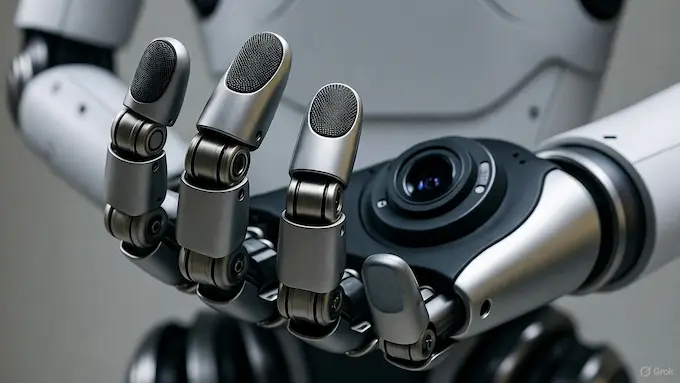
- Redundancy in vision: each hand now has an embedded palm camera. If the main cameras are blocked (say inside a cabinet), the palm cams keep sight of the grasping operation. That improves adaptability and safety. FigureAI+1
- Touch: custom first-generation tactile sensors at the fingertips can detect forces as small as three grams small enough to feel something like a paperclip. That means better control when handling fragile or oddly shaped objects. FigureAI+2Robotics & Automation News+2
Helix is not just perception plus motion, it learns. The robot collects data (vision, action, context) and uses that to refine behavior—not just scripted responses, but “figure this out” behaviors. That’s what you want in a general-purpose humanoid. FigureAI+2aparobot.com+2
New Hardware, New Senses
Hardware matters and Figure 03 shows thoughtful upgrades aimed at making robots more capable, less brittle
| Component | What’s New | Why It Matters |
|---|---|---|
| Hands & Fingertips | Softer, more compliant fingertips; tactile sensors; surface area contact improved | Better grip, less slippage, able to manipulate fragile items or deformable materials. FigureAI+1 |
| Camera/Perception System | Higher frame rate, lower latency, wider FOV; palm cameras | Speed, awareness, dealing with corners, occlusions. FigureAI+2 SmartLoadingHub+2 |
| Battery & Electrical Safety | Multiple safety layers (battery management, cell, interconnect, pack); certified to UN38.3 standard | Reduces risk of malfunction. Important for deployment in homes. FigureAI+1 |
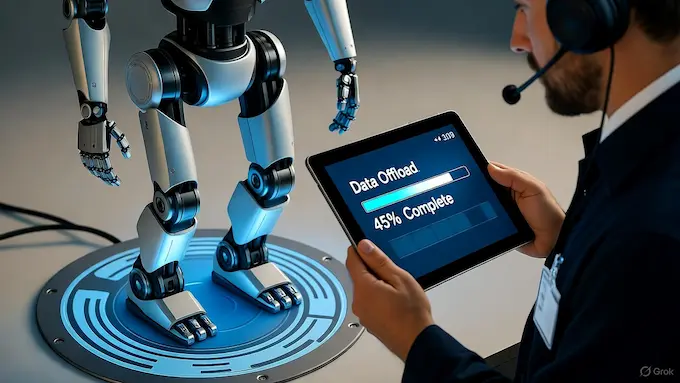
| Wireless Charging & Data Offload | Inductive charging (2 kW) via coils in feet; wireless data offload via high-bandwidth links (10 Gbps mmWave) | Less cabling, more autonomy, easier fleet maintenance. FigureAI+2 aparobot.com+2 |
| Form Factor & Materials | 9% lighter and smaller volume vs Figure 02; multi-density foam at pinch points; soft textile exterior; washable, removable materials | Safer, more comfortable, more suited to unpredictable environments. FigureAI+2 Robotics & Automation News+2 |
Designed for Home Safety and Human Interaction
Putting a robot in your home is far harder than in a lab. Homes are messy, unpredictable, filled with children, pets, odd floor mats, spilled drinks, stairs, low ceilings. Figure 03 addresses this.
- Safety features: softness matters. Soft textile coverings instead of exposed metal or hard plastic. Foam in places where joints might pinch. FigureAI+1
- Battery safety: multiple layers of protection, certification, thought for real-world mistakes: drops, overheating, misuse. FigureAI+1
- Communications: Bigger speaker, better microphone placement, improved speech-to-speech interaction. It needs to hear you and talk back cleanly. FigureAI+1
- Autonomy in power and data: Wireless charging means the robot can dock itself. If data offload is wire-free, updates and learning happen more smoothly without manual plugging or handing over SD cards. FigureAI+1
These changes reduce friction in everyday life. If your robot needs constant supervision or is dangerous around a toddler, it fails. Figure 03 seems designed to push usability closer to “set it and forget it (mostly)”.
Scale: Manufacturing & Commercial Readiness
Ambition only counts if you can build enough and maintain quality. Here Figure AI has made some big moves.
- BotQ Factory: Their own facility built for high-volume manufacturing. Initial target is about 12,000 units per year, scaling toward 100,000 units over four years. FigureAI+1
- Manufacturing methods: Moves away from slow, expensive CNC machining to processes like die casting, injection molding, stamping. These are well understood in other industries. Big upfront tooling cost, but cost per unit drops as volume increases. FigureAI+1
- Supply chain revisions: Many critical modules (actuators, batteries, sensors, electronics) are designed in-house or through tight partnerships. For robotics, keeping parts reliable, reproducible, and scalable is a major challenge. Figure seems to be laying groundwork. FigureAI+1
Commercial readiness also means customizing for fleet use: uniforms, side screens, durable materials for industrial environments. These aren’t flashy, but they matter when you deploy 100s or 1000s of units. aparobot.com+1
What Figure 03 Can Actually Do Today
Let’s get practical. Based on what Figure AI has shown so far and some third-party reporting, here are tasks Figure 03 handles and the ones still aspirational.
What Figure 03 can do:
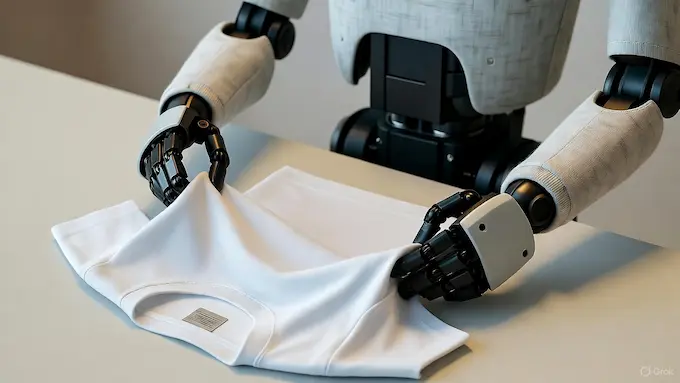
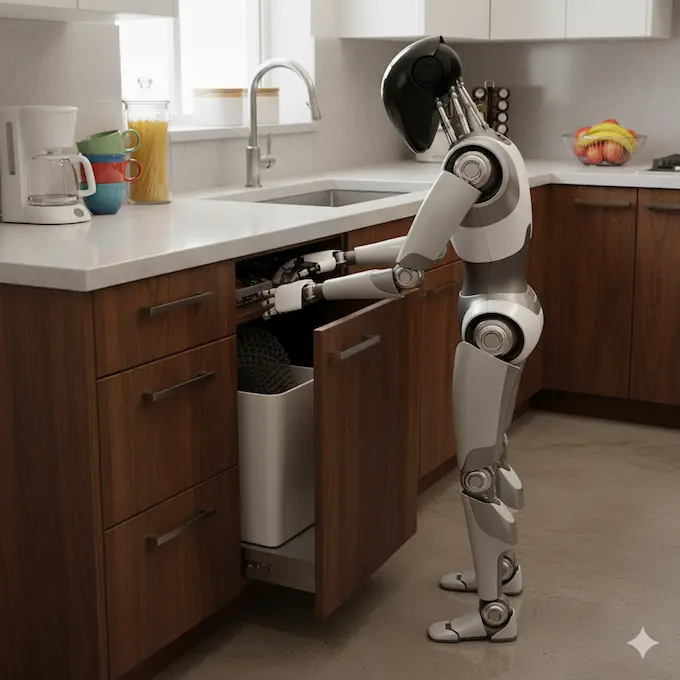
- Folding laundry, doing dishes, clearing clutter in kitchens. It has demonstrated basic household-chore behavior in structured tests. TechRadar+2FigureAI+2
- Manipulating fragile or irregular objects, thanks to tactile sensors and better fingertip design. Holding things that might slip or be oddly shaped. FigureAI+1
- Operating in cluttered environments: reaching into cabinets, working around occlusions, navigating tighter spaces better than previous generation. FigureAI+1
- Autonomous recharging: stepping onto charging mats that use inductive coils, so it can maintain operation with less manual intervention. FigureAI
What Figure 03 cannot yet or hasn’t fully achieved in practice:
Fully generalized behaviour. Robots learn best in controlled or semi-controlled settings. Throwing every possible situation at them still causes failures.
Full home deployment. It’s not yet clear how well it handles unforeseen obstacles (stairs, pets, liquids, complex dynamics) over long stretches of time.
Speed. Many tasks are still slow and deliberate. That’s part safety, part control. In many real-world settings speed matters.
Cost and affordability for general consumers. As with all early robots, cost will likely be high; economics depend heavily on scale and yield.
Key Comparisons: What Makes It Different
To understand why Figure 03 is an interesting milestone, we can compare it to earlier humanoids—both its predecessors at Figure, and robots from other firms.
| Feature | Figure 02 & Prior | Figure 03 |
|---|---|---|
| Vision / Perception | Lower frame rate, more limited latency, narrower FOV; fewer safety-built hands | Double frame rate, quarter latency, wider FOV; palm cameras; better tactile sensing |
| Safety & Home-friendly Design | Less attention to soft exteriors, weight/volume, home safety features | Textile coverings, foam safety, removable washable parts, reduction in mass and volume (~9%) |
| Manufacturing & Cost | Prototype or lower-volume production; more expensive parts; slower methods | Built from the ground up for mass production; factories, injection molding, die-casting, scalable supply chains |
| Autonomy / Charging / Data | More tethered, more manual intervention; less data bandwidth and data offload | Wireless charging with inductive feet; high-bandwidth wireless data offload (10 Gbps mmWave); integrated learning loop |
Compared to non-Figure robots (e.g., optimus, Boston Dynamics etc.), Figure 03’s differentiators are in combining safety + touch + home usability + design for mass production. Many competitors still focus on industrial or research settings, less on homes or general-purpose tasks.
Risks, Limitations, and What’s Next
No robot is perfect. Figure 03 takes steps, but some issues will need steady engineering, product-market feedback, regulatory oversight.
- Reliability over long durations. Wear and tear, durability of soft materials, sensor drift, battery degradation, firmware bugs.
- Edge case behavior. Kitchen spills, stairs, slippery surfaces, pets, kids, dynamic events not seen in training. Helix will need massive real-world data.
- Safety certification and regulation. Battery certifications, electrical safety, mechanical pinch-point safety, data privacy (the robot sees and stores a lot).
- Human trust and social acceptability. Looks and feel matter. No one wants a robot that’s too creepy, too loud, unreliable. Softness, textile coverings help; design is part perception.
- Cost and scale challenges. Building BotQ is expensive. Tooling, yield, supply chain disruptions—these could push actual price per unit higher than hoped.
What’s next? Better data collection (homes, diverse environments), improving speed and fluidity, lowering cost, tighter safety control frameworks. Also social norms: how humans live with robots, how robots express failure, how intervention works.
What tasks can the Figure 03 humanoid robot perform?
It can handle many everyday chores: folding laundry, washing dishes, clearing clutter, reaching into cabinets, manipulating odd-shaped objects. It’s designed for both home tasks and industrial/commercial uses like warehouse automation, pick-and-place, sorting. The Helix AI system helps it adapt when given instructions in natural language. FigureAI+2Business Tech Africa+2
How does Figure 03’s sense of touch work?
It uses custom tactile sensors in its fingertips which can feel forces as small as three grams. Softer compliant fingertips increase surface contact area. The robot also has embedded palm cameras for visual feedback when the main view is blocked. That combination of touch + vision lets it adjust grip, prevent slips, handle fragile or deformable objects. FigureAI+1
Is the Figure 03 robot safe to be around in a home environment?
Yes, safety is baked into the design. Soft textile exteriors and multi-density foam at joints reduce risk of injury. Battery safety is certified (UN38.3) with multiple layers of protection. The robot is lighter (~9% less mass) and smaller than its predecessor making it easier to maneuver in tight, household spaces. Washable coverings, better speaker/mic placement, and wireless charging further reduce hazards. FigureAI+1
What are the key differences between Figure 03 and previous humanoid robots?
Improved vision: higher frame rates, lower latency, wider field of view, palm cameras
Better tactile touch sensors; more compliant fingers
Design for safety: softer materials, better battery safety, homes in mind
Manufacturing designed for volume: new facility (BotQ), manufacturing methods meant to lower cost per unit drastically as scale increases
Better integration with a learning AI system (Helix), including autonomous operation, wireless charging, data offload.
How is Figure 03 designed for mass manufacturing?
Every major component was redesigned for manufacture: reducing part count, favoring die-casting, injection molding, stamping over slow processes. They have a brand-new factory (BotQ) with goals of building around 12,000 units/year initially, scaling to 100,000 robots over ~4 years. They also vertically integrate many modules (actuators, sensors, electronics) to maintain control over parts quality and supply chain. FigureAI+1
Why Figure 03 Matters
Figure 03 is not perfect, but it matters. Here’s why I think this is a inflection point in AI robotics:
- The combination of touch, perception, safety, and scalability is rare. Many robots are strong in one area but weak in others. Figure 03 tries to pull all together.
- The design for mass manufacture (BotQ, tooling methods) means this is more likely to be deployed at scale rather than remain a lab novelty.
- If Helix can learn robustly from real human environments, it may reduce the gap between scripted robotics and adaptable robotics. That means less brittle behavior and more “I asked it to do X, it did it” kind of reliability.
Closing Thoughts
General-purpose humanoid robotics is still a wild frontier. Figure 03 doesn’t solve everything. But it shifts the conversation from “when will we get robots that can do chores” to “here’s a robot that is built with chores in mind, safety in mind, manufacturability in mind.” That’s big.
If you live in an apartment, with stairs and kids, it’s not ready to be your housemate yet. But as a proof point, it shows what’s possible when engineers, designers, and manufacturers commit to building more than spectacle.
We might look back and see Figure 03 as one of the first humanoids that tried seriously to cross the abyss between research lab and home countertop. And if Helix continues to learn, scale, and improve, the future of robotics could finally feel tangible.



