
Table of Contents
Mobileye acquires humanoid robotics startup Mentee for $900M
Mobileye’s expansion beyond cars | Weekly Robotics News | The Bolt and the Byte
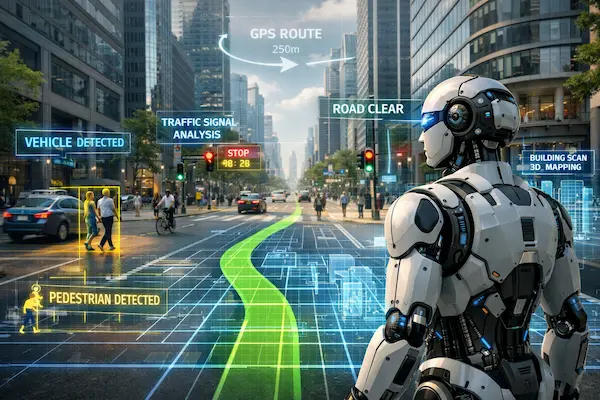
Mobileye announced it is acquiring humanoid robotics startup Mentee Robotics for approximately $900 million. The deal signals Mobileye’s intention to apply its autonomous driving perception and navigation technology beyond vehicles into general-purpose humanoid robots.
Mentee Robotics has been developing AI-driven humanoid systems designed to operate in real-world environments. By integrating Mobileye’s vision stacks and mapping expertise, the acquisition positions Mobileye to accelerate development of robots that can safely move and operate around humans.
Why it matters: Autonomous driving and humanoid robotics share core challenges such as perception, decision-making, and safety. This move reflects growing convergence between mobility AI and robotics.
Grab acquires AI robotics firm Infermove to boost delivery automation
Delivery robots meet ride-hailing scale | Weekly Robotics News | The Bolt and the Byte
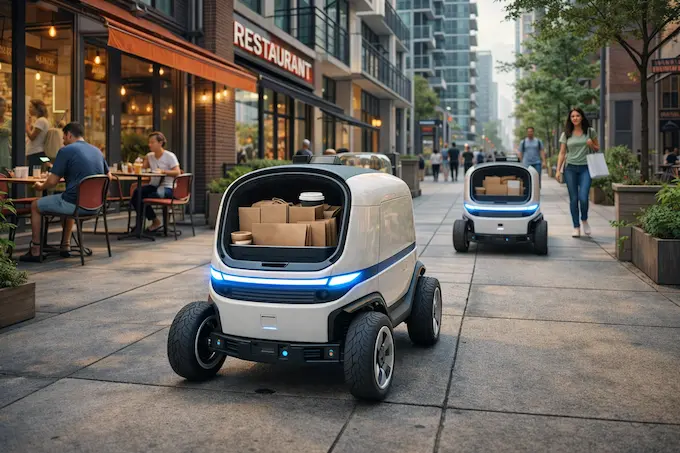
Southeast Asian super-app Grab has acquired Chinese AI robotics company Infermove to strengthen its autonomous delivery capabilities. The deal aims to integrate robotics and AI into Grab’s logistics and food delivery ecosystem.
Infermove specializes in autonomous navigation and robotics software optimized for dense urban environments. Grab says the acquisition will help it improve efficiency and reliability in last-mile delivery.
Why it matters: Large delivery platforms are increasingly turning to robotics to reduce costs and scale operations, particularly in congested cities where human delivery faces limits.
Boston Dynamics’ next humanoid robot will carry Google DeepMind DNA
Humanoid intelligence upgrade | Weekly Robotics News | The Bolt and the Byte
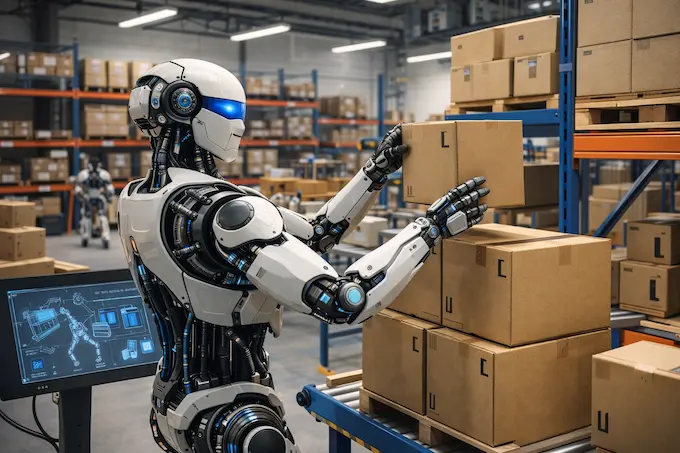
Boston Dynamics revealed that its next-generation humanoid robot will incorporate artificial intelligence research from Google DeepMind. The collaboration aims to give humanoids more advanced reasoning, learning, and adaptability.
By integrating DeepMind’s AI models, Boston Dynamics hopes to move beyond scripted behaviors toward robots that can understand context and respond flexibly to changing environments.
Why it matters: Combining advanced hardware with cutting-edge AI could accelerate humanoids from demos into practical industrial and service roles.
Nvidia outlines full-stack ambition to become the ‘Android of robotics’
A platform play for robots | Weekly Robotics News | The Bolt and the Byte
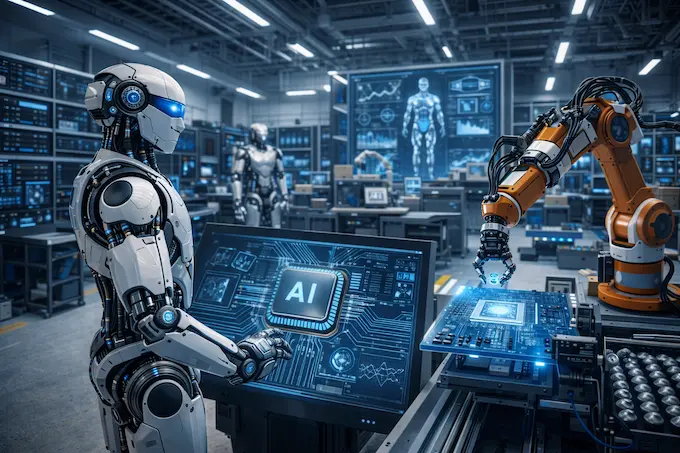
Nvidia detailed its strategy to provide a full robotics stack spanning hardware, simulation, AI models, and software frameworks. The company aims to become a foundational platform for general-purpose robotics development.
This approach mirrors Nvidia’s past success in GPUs and autonomous vehicle computing. By offering standardized tools, Nvidia hopes to lower barriers for robotics companies building intelligent machines.
Why it matters: Platform dominance could shape how robotics ecosystems evolve, influencing standards, compatibility, and innovation speed.
Nvidia reveals humanoid robot plans using self-driving car technology
Autonomy crosses industries | Weekly Robotics News | The Bolt and the Byte
Nvidia announced plans to adapt technologies originally developed for self-driving cars to humanoid robots. These include perception systems, simulation environments, and decision-making software.
The company believes autonomous driving and humanoid robotics share similar technical foundations, particularly in real-world navigation and safety. Why it matters: Reusing mature automotive autonomy technology could shorten development timelines for humanoid robots
LG showcases a home robot that cooks, folds laundry, and empties dishwashers
Household robotics goes multifunctional | Weekly Robotics News | The Bolt and the Byte
LG unveiled a home robot concept at CES capable of performing multiple domestic tasks, including cooking assistance, laundry folding, and dishwashing support. The robot combines manipulation, vision, and AI planning.
While still a prototype, LG positioned the robot as a glimpse into future smart homes where robots act as general assistants rather than single-task devices.
Why it matters: Multifunction home robots could redefine consumer expectations beyond cleaning-only machines.
Mammotion Luba 3 AWD robot mower adds lidar for precision cutting
Smarter lawn care robots | Weekly Robotics News | The Bolt and the Byte
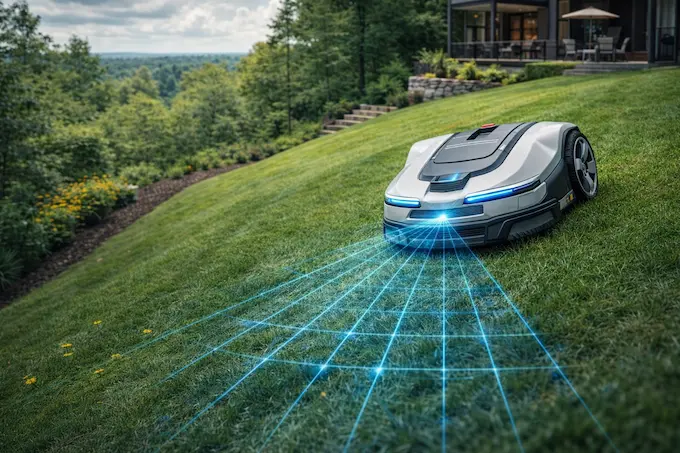
Mammotion introduced the Luba 3 AWD robot lawnmower at CES, featuring lidar navigation and all-wheel drive. The system is designed to handle uneven terrain without boundary wires.
Coverage highlights improved mapping accuracy, obstacle detection, and off-road capability compared to earlier robotic mowers.
Why it matters: Advanced sensing is pushing outdoor robots into more complex, real-world environments.
Scientists create microscopic autonomous robots for medical use
Robotics at cellular scale | Weekly Robotics News | The Bolt and the Byte
Researchers reported the creation of microscopic autonomous robots capable of moving and acting independently at extremely small scales. These robots are designed for potential medical and scientific applications.
The study demonstrates controlled movement and task execution using physical and chemical cues rather than traditional electronics.
Why it matters: Micro-robots could enable new forms of targeted drug delivery and minimally invasive medical procedures.
CES 2026 Day 1 highlights robotics-enabling technologies
The building blocks of robots | Weekly Robotics News | The Bolt and the Byte
CES 2026 opened with major announcements in AI chips, sensors, and computing platforms that indirectly power robotics innovation. While not all products were robots themselves, many enable future autonomous systems.
The focus was on efficiency, edge computing, and AI acceleration—key requirements for mobile and humanoid robots.
Why it matters: Robotics progress depends as much on enabling technologies as on robot designs themselves.
Humanoid robots gain ‘pain-sensing’ electronic skin
Safer human-robot interaction | Weekly Robotics News | The Bolt and the Byte
Researchers developed robotic skin capable of detecting damaging pressure and triggering reflex-like responses. The system allows robots to react immediately to harmful contact rather than relying on centralized processing.
This mimics biological pain responses to reduce injury and equipment damage.
Why it matters: Safety is critical for robots operating around people in homes, factories, and hospitals.
Robots dominate CES 2026 show floor
From novelty to necessity | Weekly Robotics News | The Bolt and the Byte
Robots were among the most visible technologies at CES 2026, appearing in consumer, industrial, and service contexts. Exhibits ranged from household assistants to mobility and logistics robots.
The diversity reflects how robotics is moving beyond experimental stages into broader markets.
Why it matters: CES visibility often predicts which technologies manufacturers plan to commercialize next.
Hyundai positions robotics as a core mobility strategy
Robots beyond cars | Weekly Robotics News | The Bolt and the Byte
Hyundai highlighted robotics as a central pillar of its future mobility vision during its CES robotics media day. The company emphasized AI, automation, and integration across transportation and logistics.
This signals long-term investment rather than experimental exploration.
Why it matters: Major manufacturers committing to robotics can accelerate real-world deployment at scale.
AMRs vs AGVs debate resurfaces in manufacturing automation
Choosing the right robot movers | Weekly Robotics News | The Bolt and the Byte
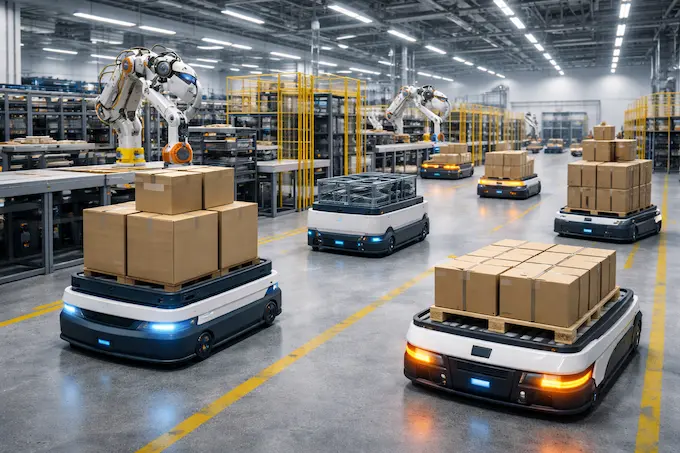
A new analysis revisits the tradeoffs between autonomous mobile robots (AMRs) and automated guided vehicles (AGVs) in factories and warehouses. The discussion centers on flexibility versus predictability.
As automation investments grow, companies must align robot mobility choices with operational needs.
Why it matters: The AMR vs AGV decision impacts layout design, safety, and long-term ROI.
Interactive consumer robots push beyond cleaning roles
Robots as companions and helpers | Weekly Robotics News | The Bolt and the Byte
New consumer robotics launches emphasize interaction and assistance rather than single-purpose cleaning. Companies are experimenting with robots that engage users socially while performing light tasks.
This reflects a shift toward experience-driven robotics.
Why it matters: Consumer acceptance depends on trust, usefulness, and long-term support.
Robotics and AI convergence accelerates across industries
A unifying trend | Weekly Robotics News | The Bolt and the Byte
Across CES and recent acquisitions, robotics and AI are increasingly treated as inseparable technologies. From humanoids to delivery bots, intelligence is becoming the defining feature.
This convergence is shaping investment, regulation, and product strategy. Why it matters: Robotics success will depend on advances in AI as much as mechanical design
Weekly Robotics News – FAQs
Why is CES important for robotics?
CES reveals which technologies companies intend to commercialize. Robotics presence there signals industry confidence.
How soon will humanoid robots become practical?
Many remain prototypes, but investment and AI advances suggest gradual deployment in controlled environments first.
Are home robots replacing human labor?
Most current designs assist rather than replace humans, especially in repetitive or hazardous tasks.
What role does AI play in robotics progress?
AI enables perception, learning, and autonomy, making robots adaptable rather than scripted.
Which sectors are adopting robots fastest?
Logistics, manufacturing, and home automation are leading early adoption.
Is this research or real products?
The stories include a mix of research, prototypes, and early commercial deployments, typical of weekly robotics news coverage.
Conclusion
This week highlights robotics moving from isolated demos toward integrated systems powered by AI, platforms, and large-scale investment. Humanoid robots, delivery automation, and home assistants all point toward broader commercialization. As weekly robotics news continues to track these trends, next week’s focus will likely shift toward deployment timelines, regulation, and real-world performance data.



