
Table of Contents
If you name a machine the T800, you are making a statement. You are essentially inviting the entire internet to make Skynet jokes. You are telling the world that subtlety is not really your thing. And if you are EngineAI, a Shenzhen-based robotics outfit, you are also making a promise about performance.
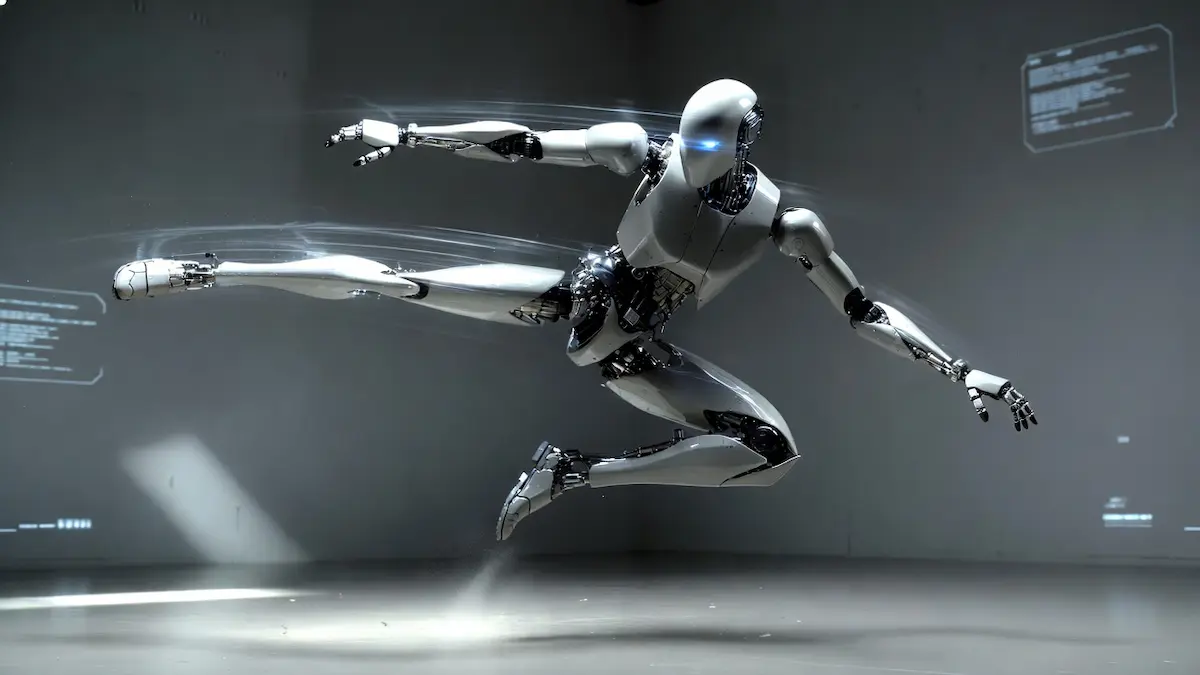
When the first footage of the T800 Robot dropped recently, the reaction wasn’t awe. It was skepticism. Deep, cynical skepticism. The video showed a humanoid executing roundhouse kicks, flying spin kicks, and movements so fluid they looked like a cutscene from Tekken 8. Reddit threads lit up with accusations of CGI. Twitter experts slowed the footage down frame by frame, looking for artifacts.
But here is the thing. It wasn’t CGI. It was just a very, very capable robot.
This isn’t just another stiff, servo-whirring machine trying not to fall over while carrying a box. The T800 Robot represents a shift in how we think about humanoid kinetics. It is moving away from the “careful toddler” phase of robotics and entering the “athletic” phase. We are going to look at what makes this machine tick, dig into the specs that allow a 75kg biped to backflip, and analyze whether this is a practical tool or just an expensive stuntman.
Let’s dive in.
1. What is the EngineAI T800? Overview & “Born to Disrupt” Philosophy
To understand the T800 Robot, you have to understand where it comes from. EngineAI hasn’t been building slow, safe warehouse bots. They have been iterating on agility. Their previous model, the EngineAI PM01, was already doing backflips and showing off impressive dynamic stability. But the T800 is the full-size realization of that tech.
The company uses the slogan “Born to Disrupt,” and while marketing slogans are usually fluff, this one actually fits the hardware profile. The traditional approach to humanoid robotics—think early Asimo or even the first iterations of Optimus—was about static stability. You move a leg, you make sure the center of mass is safe, then you move the next leg. It is safe. It is reliable. It is also agonizingly slow.
The T800 Robot is built on dynamic stability. This means the robot is effectively constantly falling and catching itself, much like a human does when running. It allows for speed and explosive power, but it requires control algorithms that are orders of magnitude more complex.
This isn’t a research project stuck in a lab. EngineAI is positioning this as a general-purpose platform. They are targeting everything from industrial logistics to service roles, though they have chosen to market it through martial arts. It is a bold strategy. If your robot can execute a high-speed spin kick without face-planting, carrying a crate of Amazon packages is a trivial task by comparison.
2. T800 Technical Specifications Breakdown (Full Review)
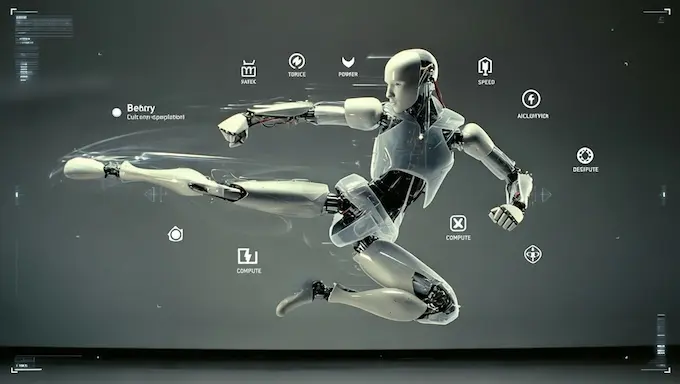
When you strip away the sleek exterior shell and the dramatic lighting, you are left with a collection of actuators, sensors, and structural alloys. This is where the magic happens. The specs of the T800 Robot are significantly higher than what we typically see in the commercial humanoid sector.
Here is the raw data on the machine:
Table 1: EngineAI T800 Core Specifications
| Feature | Specification | Impact on Performance |
|---|---|---|
| Height | 173 cm (Approx 5’8″) | Human-scale for existing infrastructure. |
| Weight | 75 kg (165 lbs) | Optimal power-to-weight ratio for agility. |
| Degrees of Freedom (DoF) | 41 (Total), 29 (Body), 7 (Per Hand) | Allows for complex, nuanced movement ranges. |
| Peak Joint Torque | 450 N·m | Explosive power for jumps and kicks. |
| Instant Peak Power | 14,000 W | Rapid acceleration and dynamic response. |
| Locomotion Speed | 3 m/s (approx 6.7 mph) | Faster than average human walking speed. |
| Compute | Intel N97 + NVIDIA AGX Orin | 275 TOPS for AI processing and vision. |
The number that should jump out at you is 450 N·m of peak torque.
For context, most collaborative robots or early humanoids operate with significantly less joint torque to ensure safety and conserve power. By cranking the torque up to 450 N·m, the T800 Robot can generate the explosive force needed to launch its 75kg frame into the air. This is the “muscle” behind the jumps. It is not enough to just be smart; you have to be strong enough to overcome gravity instantly.
The 41 Degrees of Freedom (DoF) is also a critical metric. A robot with low DoF moves like a tank—rigid and linear. With 41 DoF, including 7 in each hand, the T800 Robot can manipulate objects and articulate its limbs in a way that mimics human physiology almost perfectly. This is why the motion looks so eerie to casual observers. We are used to robots moving like robots. When they start moving like athletes, our brains trigger the uncanny valley response.
3. Battery Life & Endurance: How Long Can It Last?
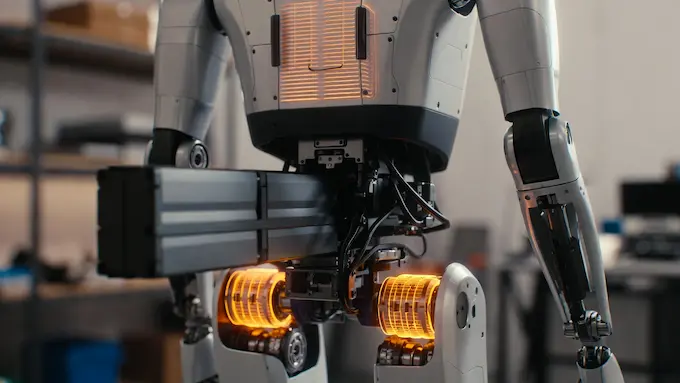
High performance usually kills battery life. If you run a laptop at full CPU load, it dies in an hour. If you run a 75kg robot doing karate kicks, you would expect it to drain its power source in minutes.
Yet, the T800 Battery Life is rated for 4 to 5 hours of continuous operation.
This is where the hardware engineering gets interesting. EngineAI isn’t using standard off-the-shelf lithium-ion packs you might find in an e-bike. They are using a modular solid-state battery architecture.
Solid-state batteries have been the “holy grail” of tech for a decade, promising higher energy density and better safety profiles than liquid electrolyte batteries.
By using solid-state tech, the T800 Robot can pack more watt-hours into a lighter frame. This creates a virtuous cycle. A lighter battery means the robot weighs less. A lighter robot requires less energy to move. Less energy consumption leads to longer runtime.
But power is only half the equation. Heat is the other. When you push 14,000 watts of peak power through joint actuators, things get hot. Fast. Heat increases resistance and degrades performance. To combat this, the T800 Robot features an active cooling system embedded directly into the leg joints. This is likely a liquid cooling loop or high-flow forced air system designed to keep the actuators in their optimal thermal window. It allows the robot to perform high-intensity tasks—like running or fighting—without thermal throttling. It is the difference between a sprinter who can run one race and a marathon runner who keeps going.
4. Real or CGI? Debunking the Fake Video Rumors
We need to address the controversy because it tells us something important about the state of robotics.
When the launch video dropped, the internet screamed “Fake.” People claimed the lighting was too perfect. They said the movements were too smooth. They claimed there was no “micro-jitter”—the tiny, imperceptible shaking common in robotic limbs holding a pose. Is the T800 robot real? Or was this a venture capital scam?
The skepticism was understandable. We have been burned by fake tech demos before. But in this case, the skepticism was wrong.
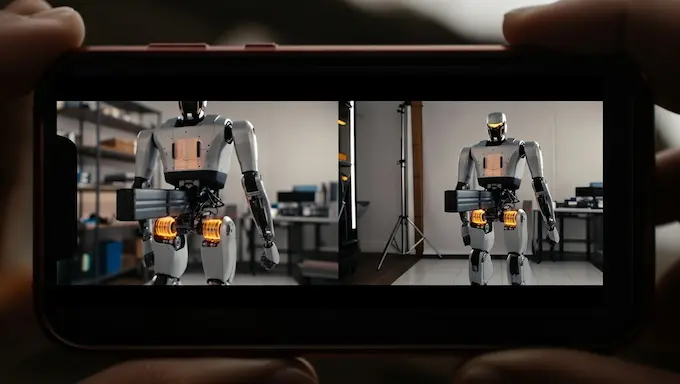
EngineAI released raw, behind-the-scenes footage to settle the debate. This footage showed the T800 Robot in a plain studio, stripped of the cinematic color grading. You could hear the whine of the motors. You could see the floor tiles vibrate slightly when the robot landed a jump. You could see the subtle corrections in the ankles as it balanced.
The reason the original video looked like CGI wasn’t because it was fake. It was because the control algorithms are that good. The lack of jitter suggests high-frequency control loops that are micro-correcting faster than the human eye can perceive. The “floaty” look of the jumps is simply physics working correctly—a machine with high power-to-weight ratio moves effortlessly.
This incident highlights a new benchmark. We have reached a point where reality is indistinguishable from a render. The T800 Robot is physically real, and that is far more terrifying—or exciting, depending on your view—than a CGI hoax.
5. Why Martial Arts? The Utility of a Fighting Robot
A common complaint popped up in the Reddit threads discussing the T800. Users asked, “Why are we teaching robots to fight? Can it do my laundry?”
It is a fair question. On the surface, a kickboxing robot seems like a gimmick. But from an engineering perspective, martial arts is the ultimate stress test.
Think about what a roundhouse kick requires. The robot has to shift its entire 75kg weight onto one foot. It has to generate rotational torque with its hips. It has to extend a leg, changing its moment of inertia instantly. And it has to do all of this while compensating for the recoil force of the kick. If the control loop is off by a millisecond, the robot falls over.
If the T800 Robot can balance on one leg while spinning, it can easily navigate a cluttered warehouse floor. If it can absorb the impact of a landing, it can carry heavy boxes without damaging its joints. The martial arts display is a proxy for general agility.
That said, EngineAI is also leaning into the entertainment angle. The promotional materials mention a “Mecha King” robot boxing league. This isn’t just a side project; it creates a revenue stream and a public testing ground. Just as Formula 1 racing pushes car technology that eventually trickles down to your sedan, robot combat could push the limits of actuator durability and battery discharge rates for the T800 Robot.
6. EngineAI T800 vs. Tesla Optimus vs. Boston Dynamics Atlas
The EngineAI Robotics team isn’t operating in a vacuum. They are entering a crowded ring. To understand where the T800 fits, we have to compare it to the heavyweights: Tesla’s Optimus and Boston Dynamics’ Atlas.
Table 2: The Humanoid Landscape
| Feature | Specification | Impact on Performance |
|---|---|---|
| Height | 173 cm (Approx 5’8″) | Human-scale for existing infrastructure. |
| Weight | 75 kg (165 lbs) | Optimal power-to-weight ratio for agility. |
| Degrees of Freedom (DoF) | 41 (Total), 29 (Body), 7 (Per Hand) | Allows for complex, nuanced movement ranges. |
| Peak Joint Torque | 450 N·m | Explosive power for jumps and kicks. |
| Instant Peak Power | 14,000 W | Rapid acceleration and dynamic response. |
| Locomotion Speed | 3 m/s (approx 6.7 mph) | Faster than average human walking speed. |
| Compute | Intel N97 + NVIDIA AGX Orin | 275 TOPS for AI processing and vision. |
The T800 Robot differentiates itself through pure athleticism.
Tesla’s Optimus is being built to be affordable and manufacturable. It moves carefully. It is designed to fold laundry and assemble cars. It is the Ford Model T of robots.
Boston Dynamics’ Atlas (the new electric version) is a marvel of range of motion. It can twist its limbs in ways humans can’t. It is a research platform designed to push boundaries.
The T800 Robot sits in a unique niche. It is more aggressive than Optimus but perhaps more commercially focused on “action” than Atlas. It is the athlete of the group. While Optimus is trying to figure out how to thread a needle, the T800 is figuring out how to kick a door down. Both are useful, but for very different reasons.
7. “Terminator” T800 vs. EngineAI T800: Branding or Warning?
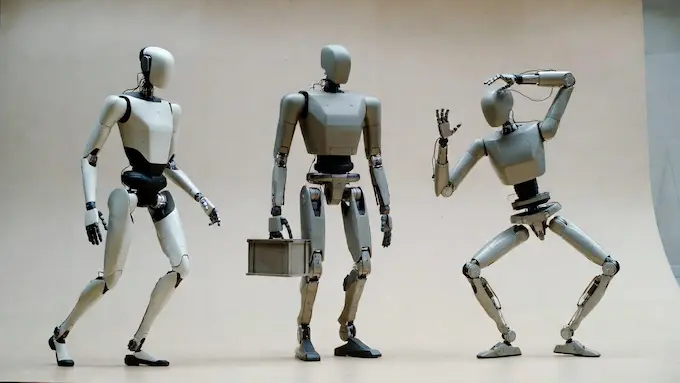
Let’s address the name. T800.
It is impossible to ignore the pop-culture baggage. In the movies, the T-800 is an infiltration unit designed to terminate. By adopting this name, EngineAI is deliberately courting controversy. It is aggressive marketing. It grabs headlines. It makes you click the video.
But does it signal danger?
The Reddit threads were full of people half-jokingly asking if we are doomed. The reality is that the T800 Robot has extensive safety protocols. The specs list a “Force Control Accuracy” of 5%. This means the robot knows exactly how much force it is applying. It can distinguish between kicking a punching bag and shaking a human hand.
Force control is the safety break. Without it, a robot is just a blind machine that will crush whatever is in its path. With it, the robot becomes collaborative. It can sense resistance and stop. So while the name suggests a dystopian future, the engineering suggests a safe, collaborative tool. The branding is just the hook; the safety tech is the reality.
8. Potential Applications: Beyond the Fighting Ring
So, aside from winning a robot boxing match, what is the T800 Robot actually good for?
The high torque numbers (450 N·m) suggest it would be excellent at heavy industrial lifting. A robot that can jump can also squat with a heavy load. It can move quickly across large warehouse floors, reducing cycle times for logistics.
The EngineAI Robotics platform also supports “Secondary Development.” This is crucial. It means they are opening the software up to developers. A third-party company could write code to make the T800 a security patrol bot, using its 360-degree LiDAR and vision systems to monitor a facility. Another developer could program it for disaster relief, where its agility would allow it to climb over rubble that would stop a wheeled robot.
The “Service Associate” role mentioned in their video is also interesting. Imagine a hotel porter that can actually carry four suitcases at once and run them up the stairs when the elevator is broken. That is the utility of a high-dynamic humanoid.
9. EngineAI T800 Price & Availability
If you want to buy one, where do you stand?
Currently, the robot is in a pre-order or inquiry phase via their Global Flagship Store. While a specific EngineAI Robot Price hasn’t been plastered on a billboard, industry whispers and comparisons give us a clue.
Competitors like the Unitree G1 are pricing aggressive entry-level models around $16,000. High-end research platforms often go for $50,000 to $100,000. Given the premium materials (aviation aluminum, solid-state batteries) and the high-performance actuators, the T800 Robot is likely targeting the mid-to-high commercial tier. It won’t be cheap, but it aims to be cheaper than a human worker over a 5-year timeline.
The goal for EngineAI is likely to undercut western competitors on price while matching them on specs—a classic strategy in the Shenzhen tech ecosystem. If they can deliver this level of performance at a price point accessible to medium-sized warehouses, they will indeed disrupt the market.
10. Conclusion: Is the T800 the Future of Robotics?
The T800 Robot is impressive. It is loud, it is fast, and it is technically sound.
It has successfully navigated the “CGI” accusations to prove that the hardware is real. The T800 Battery Life sets a new standard for endurance in agile platforms. The decision to focus on high-torque movement separates it from the slower, more cautious robots we are used to seeing.
There are still hurdles. Hardware is hard, but software is harder. We need to see if the T800’s “brain” is as good as its “body.” Can it navigate a messy room? Can it learn new tasks quickly? These are the questions that will determine its long-term success.
But as a piece of engineering, the T800 Robot is a triumph. It feels less like a tool and more like a creature. It has transcended the robotic waddle and achieved a fluid, athletic grace. Whether it ends up boxing in a ring or stacking boxes in a warehouse, one thing is clear: the age of the slow robot is ending. The age of the T800 is just starting.
EngineAI promised disruption. Looking at the T800 Robot, it looks like they might just deliver it.
Is the T800 robot real or CGI?
Answer: It is real. While the initial reveal used cinematic lighting that looked like CGI, EngineAI released raw “behind-the-scenes” footage verifying the robot’s physical presence and mechanical agility without visual effects.
What is the battery life of the T800?
Answer: The T800 features a modular solid-state battery that provides approximately 4 to 5 hours of endurance, even during high-intensity operations.
How much does the EngineAI T800 cost?
Answer: Official pricing has not yet been publicly released, but as a high-performance humanoid rivaling the Tesla Optimus, industry analysts expect it to fall in the premium commercial robotics range (likely $20,000–$50,000+ depending on configuration).
Who is the founder of EngineAI?
Answer: EngineAI is a Shenzhen-based robotics company. Specific founder details are often less publicized than western CEOs, but the company has rapidly gained attention for its PM01 and SE01 models before releasing the T800.
What is the most advanced robot right now?
Answer: The T800 is a top contender for “most agile” due to its 450 N·m torque and martial arts capabilities. However, it competes with Boston Dynamics’ Atlas (for mobility) and Tesla’s Optimus (for autonomous manufacturing tasks).
Glossary of Difficult Terms
These terms are frequently used in the context of the T800 Robot and the wider humanoid robotics industry.
- Humanoid Robot: A robot designed to resemble the human body, typically with a head, torso, two arms, and two legs (bipedal). They are built to operate seamlessly in environments made for humans.
- Actuator: A component of a machine that controls a mechanism or system by converting an energy source (like electrical or hydraulic) into physical motion. In robotics, actuators are essentially the “muscles” that move the joints.
- Torque (N·m): A measure of the twisting force that causes rotation. The T800’s 450 N·m peak joint torque indicates its high mechanical strength and ability to perform powerful, dynamic movements.
- Degrees of Freedom (DoF): The number of independent ways a rigid body can move in 3D space. The T800 features 29 DoF (excluding hands) and 7 DoF per hand, indicating a high level of articulation and flexibility.
- Bipedal Platform: A mobile robot system that uses two legs for locomotion, allowing it to walk, run, and navigate complex terrains designed for humans.
- Solid-State Battery: A battery technology that replaces the liquid or polymer gel electrolytes found in traditional lithium-ion batteries with a solid conductive material. This generally results in higher energy density, faster charging, and improved safety and is used in the T800 for its 4-5 hour endurance.
- Humanoid Kinetics: The study of motion and forces involved in the movement of a humanoid robot. The T800 is cited as representing a shift in this field toward an “athletic” phase.
- EngineAI: The Shenzhen-based robotics company responsible for the development and production of the T800 humanoid robot.
- LiDAR (Light Detection and Ranging): A remote sensing technology that uses pulsed laser light to measure distances. The T800 uses a 360° LiDAR system for millisecond-level environmental modeling and precise navigation.
- Thor Chip (NVIDIA Jetson Thor): A high-performance AI chip designed for next-generation automotive and robotics applications. The T800’s Pro Edition uses this chip, providing it with high compute power (up to 2000 TOPS) for real-time decision-making.
- Omnidirectional Perception System: A robot’s sensory system, often combining technologies like LiDAR and cameras (e.g., RealSense cameras), that allows it to monitor and perceive its environment in all directions (360°) without blind spots.
- Tactile Sensing: The ability of a robot’s hands or manipulators to detect physical contact, pressure, and force, which is crucial for handling delicate objects and performing complex assembly tasks.
- Industrial Collaboration: The application of robots (like the T800) in manufacturing, logistics, or commercial service settings, working alongside or replacing human labor to perform demanding assembly, machine tending, or material handling tasks.



