
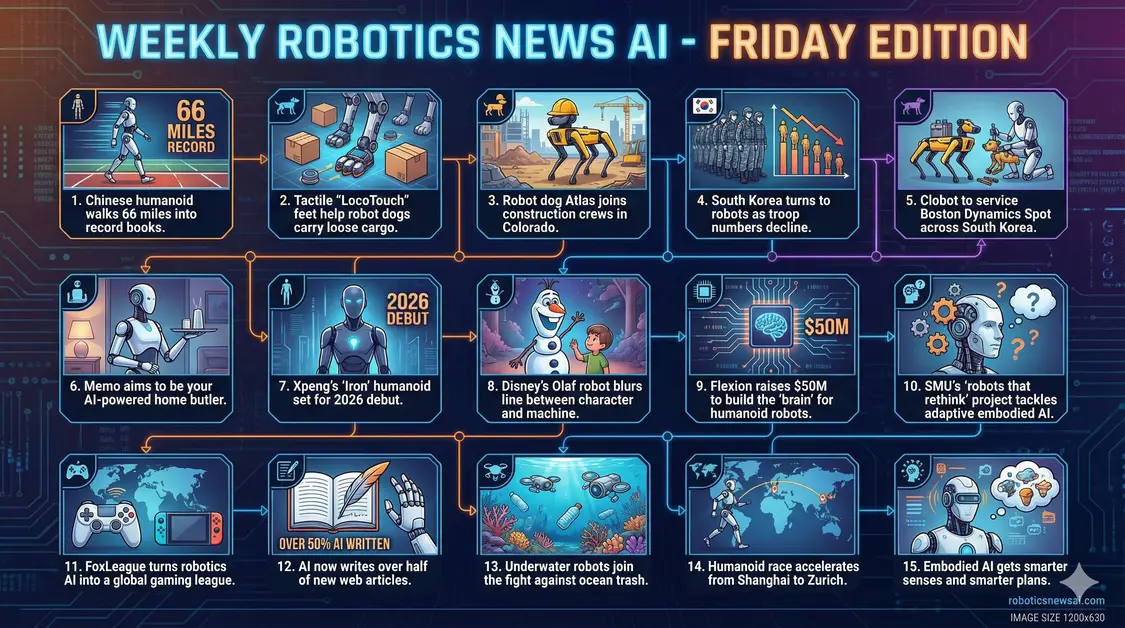
Table of Contents
1. Chinese humanoid walks 66 miles into the record books
humanoid walks 66 miles| Weekly Robotics News | The Bolt and the Byte
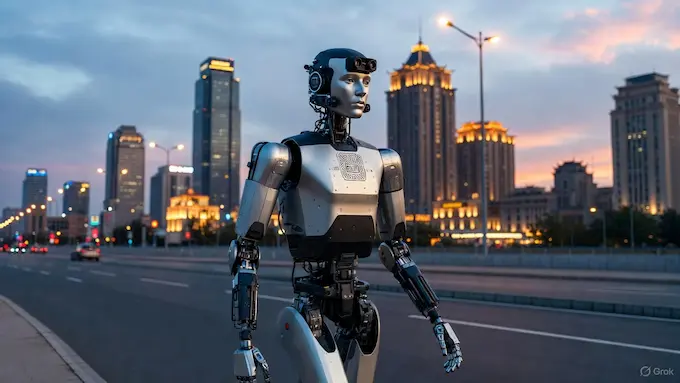
A Chinese humanoid robot has entered the Guinness World Records after walking 66 miles (about 106 km) over three days between two major cities. AgiBot A2 trekked from Suzhou to Shanghai’s Bund waterfront, navigating highways, urban streets and pedestrian zones while following traffic rules. CBS News+1
Built by Shanghai-based startup AgiBot, the 1.68 m-tall biped is designed for customer service roles and features conversational capabilities and lip-reading. The record highlights how “physical AI” robots are moving beyond lab demos into long-duration, real-world deployments, a theme that runs through this week’s weekly robotics news. News of Bahrain
China is investing heavily in humanoids, even hosting the world’s first humanoid robot games earlier this year, while analysts forecast there could be more than a billion humanoid robots deployed globally by 2050.
Source: CBS News – AgiBot A2 record walk
Key points
- AgiBot A2 walked 66 miles over three days between Suzhou and Shanghai.
- Guinness certified it as the longest distance walked by a humanoid robot.
- The route included varied terrain and real traffic regulations.
- China is positioning itself as a leader in humanoid robotics.
2. Tactile “LocoTouch” feet help robot dogs carry loose cargo
Robotic couriers learn to feel the load | Weekly Robotics News | The Bolt and the Byte
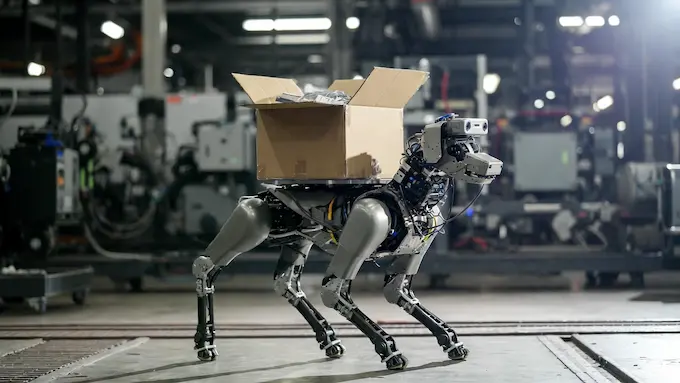
Researchers have developed a tactile sensing system called LocoTouch that lets quadruped robots carry unsecured loads—like boxes or crates—without strapping them down. Silicone-based sensors embedded in the robot’s feet measure pressure and shear forces so the robot can adjust its gait when the load shifts.
Combined with reinforcement learning and simulation, the system teaches legged robots to maintain balance even when items wobble or slide. For weekly robotics news watchers, it’s a significant step toward practical last-mile delivery robots and inspection platforms that can haul tools, supplies or medical gear across uneven terrain.
Source: TechXplore – Tactile sensors enable robots to carry unsecured loads
Key points
- LocoTouch uses soft tactile sensors in each robot foot.
- Sensors detect changes in contact and friction as loads move.
- Reinforcement learning helps the robot adapt its gait in real time.
- Potential uses include logistics, rescue and industrial inspection.
3. Robot dog Atlas joins construction crews in Colorado
From crawlspaces to data dashboards | Weekly Robotics News | The Bolt and the Byte
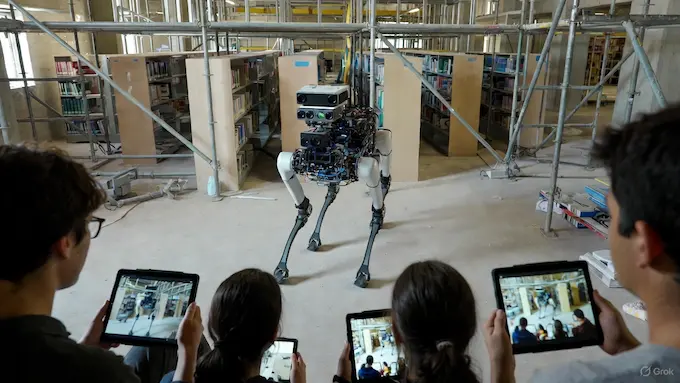
At the Anythink Nature Library construction site in Colorado, CU Denver students are sending a robotic dog named Atlas into dark crawlspaces instead of crawling themselves. The robot follows pre-planned routes while capturing 360° video and sensor data that engineers review safely at the surface.
Atlas is part of CU Denver’s new Technology Innovation in Construction minor and certificate, which blends robotics, AI, drones and data analytics for job-site workflows. The program aims to train a new generation of tech-savvy construction professionals as firms look for productivity gains of up to 15% from digital tools and automation.
Source: TechXplore – Robotics, AI, drones, and data analytics in construction
Key points
- Robot dog Atlas inspects hard-to-reach spaces on live construction sites.
- Data from 360° cameras supports planning, safety and quality checks.
- CU Denver’s new program focuses on robotics and digital tools for builders.
- Construction firms see automation as key to speed and safety.
4. South Korea turns to robots as troop numbers decline
Robot dogs, sentry systems and smart kitchens | Weekly Robotics News | The Bolt and the Byte
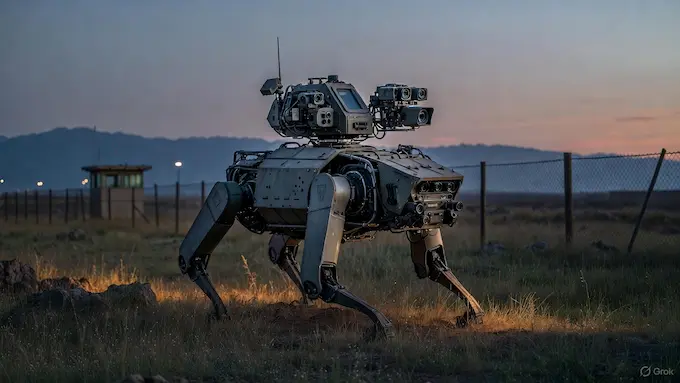
With a shrinking population and fewer conscripts, South Korea is expanding military use of robots for tasks ranging from border patrols to base logistics. Recent demonstrations show quadruped “robot dogs” inspecting dangerous areas, remote-controlled weapon platforms, and autonomous patrol systems designed to cut soldier exposure to risk.
The same push extends to everyday operations, with robots handling kitchen work, cleaning and logistics on some bases. The goal is to free human soldiers for more complex missions while using robotics and AI to maintain readiness. For weekly robotics news, it’s a notable example of how demographic pressure is accelerating defense automation.
Source: MK Business – South Korea’s growing reliance on military robots
Key points
- Falling birth rates are limiting Korea’s pool of conscript soldiers.
- Robots are being tested for patrol, surveillance and hazardous missions.
- Service robots are also being used for cooking and base logistics.
- Defense planners see robotics as essential to maintaining force levels.
5. Clobot to service Boston Dynamics Spot across South Korea
Building a support ecosystem for field robots | The Bolt and the Byte
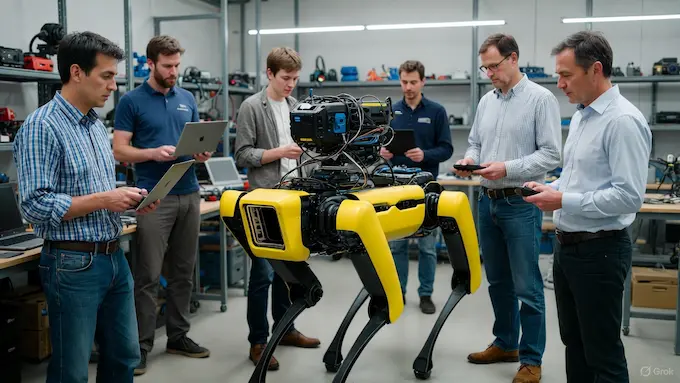
Korean robotics firm Clobot has been named an official service partner for Boston Dynamics’ Spot robots in South Korea. The company will handle maintenance, inspections and upgrades, giving domestic users a local one-stop shop for keeping the four-legged robots operational in factories, power plants and construction sites. Pulse
Until now, many Spot deployments worldwide have been limited by the need to depend on overseas support or small in-house teams. A dedicated service network signals that industrial robots are maturing into standard infrastructure, with predictable uptime and life-cycle management that enterprise buyers expect.
Source: Pulse (MK) – Clobot to maintain Boston Dynamics robots in Korea
Key points
- Clobot becomes an official domestic maintenance provider for Spot.
- Local support reduces downtime for industrial robot deployments.
- The move encourages wider use of legged inspection robots.
6. Memo aims to be your AI-powered home butler
Wine glasses, dishwashers and natural conversation | Weekly Robotics News | The Bolt and the Byte
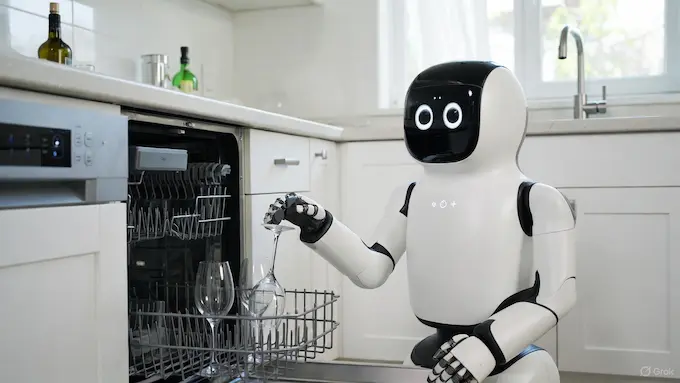
A Korean startup called Mindway AI has introduced “Memo,” a home robot designed to handle everyday chores like grabbing delicate wine glasses, loading the dishwasher and tidying surfaces. The waist-high robot combines a mobile base, arm and gripper with computer vision to recognise objects and navigate around furniture.
Memo also acts as a conversational assistant, using large language models to respond to voice commands and chat casually with users. The company is positioning the robot as a premium helper for busy households, showing how embodied AI is moving from lab demos into living rooms. For weekly robotics news readers, it’s a sign of how quickly home robots are gaining manipulation skills, not just vacuuming and security. euronews
Source: Euronews Next – Meet Memo, a home robot that can grab wine glasses and load the dishwasher
Key points
- Memo is a mobile home robot with a manipulator arm.
- It can handle fragile items like wine glasses and plates.
- Language models power natural, voice-based interaction.
- The target market is premium home assistance, not just cleaning.
7.Xpeng’s “Iron” humanoid set for 2026 debut
EV maker extends its ambitions into bipedal robots | Weekly Robotics News | The Bolt and the Byte
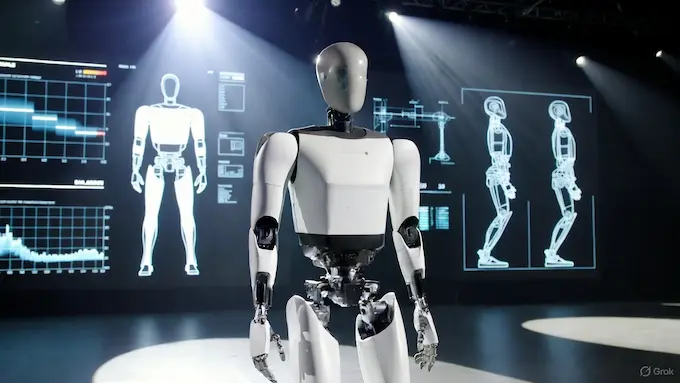
Chinese EV manufacturer Xpeng has unveiled its “Iron” humanoid robot, drawing attention after some viewers initially thought the stage demo featured a human actor. The company later opened up the torso shell on stage to show the actuators and electronics, underscoring that the lifelike motion is fully robotic.
Iron is built on Xpeng’s proprietary vision-language-action model, allowing it to interpret spoken tasks and visual context before generating whole-body motions. The company says pilot applications will begin in showrooms and factories, with broader deployments targeted around 2026. In the context of weekly robotics news, Iron highlights how consumer tech brands are racing to ship general-purpose humanoids alongside their cars.
Source: Carscoops – Xpeng’s human-like robot will arrive next year
Key points
- Xpeng revealed its “Iron” humanoid with a live demo on stage.
- The robot is driven by a vision-language-action intelligence stack.
- Early uses are planned in retail stores and industrial settings.
- Commercial deployment is targeted around 2026.
8. Disney’s Olaf robot blurs line between character and machine

Theme park animatronics get more mobile | Weekly Robotics News | The Bolt and the Byte
Walt Disney Imagineering has shown off a new Olaf robot that walks, waves and reacts with a fluidity that closely matches the animated character from Frozen. The small biped uses a combination of custom mechanics and control algorithms trained in simulation, allowing it to keep its balance through exaggerated, cartoon-like movements.
Unlike some cutting-edge humanoids, Olaf is not pitched as an autonomous AI agent; human operators still oversee performances. But the project demonstrates how reinforcement learning and advanced control are reshaping theme park robotics, making character robots more expressive and believable for guests around the world.
Source: TechRadar – Disney’s new Olaf robot is so real it’ll give you chills
Key points
- Olaf robot is designed to closely match the animated character’s motion.
- Control policies are trained in simulation before deployment.
- Human operators still supervise performances for safety and timing.
- It showcases how robotics is transforming live entertainment
9. Flexion raises $50M to build the “brain” for humanoid robots
Autonomy stack targets general-purpose humanoids | Weekly Robotics News | The Bolt and the Byte
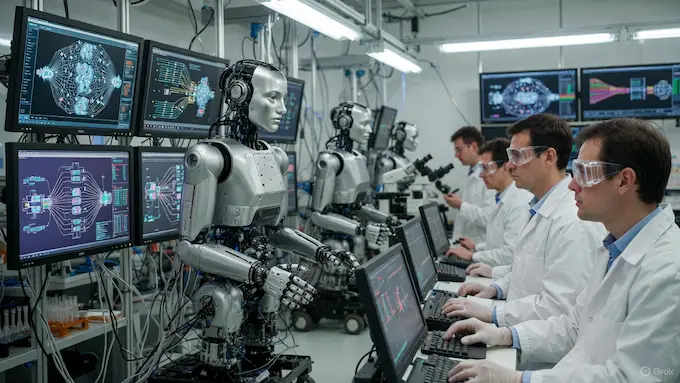
Zurich-based startup Flexion has secured $50 million in Series A funding to develop an autonomy stack that acts as the “intelligence layer” for humanoid robots. The round was led by DST Global Partners, with participation from NVIDIA’s venture arm NVentures, redalpine, Prosus Ventures and Moonfire, following a recent seed raise.
Flexion’s platform spans three layers: a Command Layer that uses language models to turn natural-language instructions into structured plans, a Motion Layer built around vision-language-action models, and a Control Layer that handles low-latency whole-body control. The goal is to let robots learn new tasks in simulation and then adapt them in the real world with far less scripting or teleoperation.
For weekly robotics news, the deal shows investor confidence shifting from hardware alone to software stacks that can power many different humanoid designs.
Source: Pulse2 – Flexion: $50 Million Raised To Build The Intelligence Layer Powering Humanoid Robots
Key points
- Flexion raised $50M Series A from top global investors.
- The startup focuses on a three-layer autonomy stack for humanoids.
- Emphasis is on simulation-to-real learning and reduced teleoperation.
- Target markets include manufacturing, logistics and disaster response.
10. SMU’s “robots that rethink” project tackles adaptive embodied AI
From fixed scripts to on-the-fly reasoning | The Bolt and the Byte
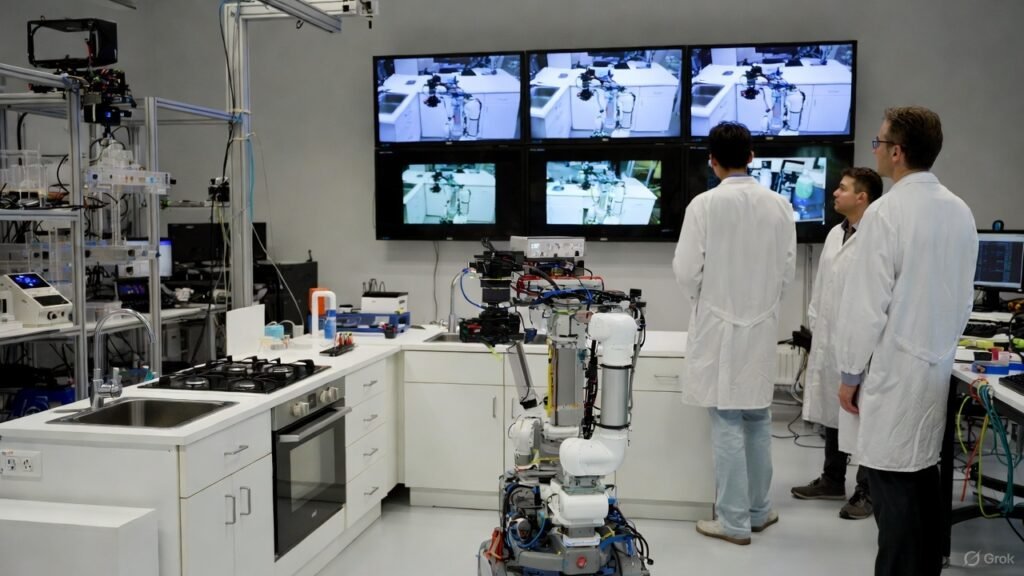
Singapore Management University’s Professor Zhu Bin is leading a research project on self-adaptive embodied AI that can adjust its behaviour when the environment changes. Instead of following rigid scripts, the system learns from tens of thousands of video sequences—around 200 tasks repeated 300 times each—to understand object states and how a scene can evolve.
The research focuses on letting robots refine their plans on the fly, for example by inferring that a missing mug might be stored in a cupboard and updating the task sequence accordingly. Potential applications include elder care and healthcare assistance, where robots must safely support people in cluttered, dynamic homes. Safety is built in through human-in-the-loop supervision, rule-based constraints and extensive testing.
Source: Singapore Management University – Robots that rethink: a SMU project on self-adaptive embodied AI
Key points
- The project trains robots on ~60,000 video sequences of everyday tasks.
- It targets embodied AI that can adapt when the environment changes.
- Use cases include elder care and therapy support.
- Strong emphasis is placed on safety and human oversight.
11. FoxLeague turns robotics AI into a global gaming league

Blended reality competition for multi-agent AI | Weekly Robotics News | The Bolt and the Byte
FoxLeague has launched as a new AI and robotics gaming platform, turning autonomous agents into competitive teams in a soccer-style league. Participants train AI agents to play in a simulated environment, then pit them against each other in structured seasons, borrowing ideas from traditional sports and robotics competitions.
The platform positions itself as both entertainment and research infrastructure: large-scale matches generate rich data for multi-agent learning while giving developers and fans a way to benchmark systems. Tied to the Foxsy ecosystem and its token economics, it shows how robotics and AI are spilling over into esports-style formats that reach mainstream audiences.
Source: Business Insider – Launch of FoxLeague a major milestone in AI robotics gaming
Key points
- FoxLeague is a competitive league for AI-controlled robotic teams.
- Matches run in simulation but draw on robotics and multi-agent AI.
- The project aims to blend entertainment with research value.
12. AI now writes over half of new web articles

What it means for readers of robotics coverage | The Bolt and the Byte
A study highlighted by TechXplore reports that more than 50% of new articles on the web are now generated by artificial intelligence, particularly in formulaic areas like news updates and how-to guides. The line between human and machine authorship is increasingly hard to spot, as detection tools struggle to keep pace.
The article notes that while many freelance writing jobs have been displaced, human authors are still crucial for originality, voice and cultural context. For weekly robotics news and similar specialist beats, that raises questions about how readers verify sources and how outlets disclose AI use. The likely future is collaboration: AI helping with drafts and data, humans deciding what matters and how to frame it.
Source: TechXplore – More than half of new articles on the internet are being written by AI
Key points
- Over half of new online articles may now be AI-generated.
- Formulaic content is most affected; nuanced writing still leans on humans.
- Detection of AI-written text remains imperfect.
- Transparency and editorial judgement are increasingly important.
13. Underwater robots join the fight against ocean trash

Autonomous cleanup in coastal waters | Weekly Robotics News | The Bolt and the Byte
One of the links shared this week points to a CNN story about an unmanned underwater robot tackling ocean trash though the full article could not be loaded here due to CNN’s robots.txt settings. Based on the URL and wider industry trends, it appears to describe a submersible system designed to locate and collect waste from coastal waters and harbors.
Robots of this kind typically combine cameras, sonar and grippers or suction devices to remove bottles, nets and other debris while reducing the need for divers to work in hazardous conditions. Even without the article’s detailed specifications, the theme fits a larger pattern in weekly robotics news: specialised robots are increasingly being deployed in harsh environments from ocean floors to construction crawlspaces—to handle repetitive, risky cleanup work.
14. Humanoid race accelerates from Shanghai to Zurich
Global push for general-purpose robot workers | The Bolt and the Byte
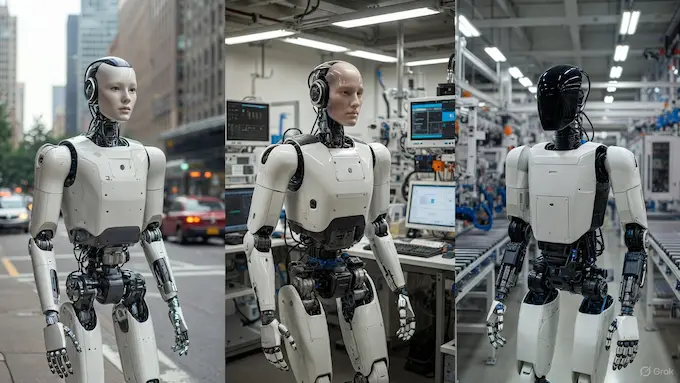
Taken together, this week’s stories show a rapid acceleration in humanoid robotics. In China, AgiBot’s A2 has just walked 66 miles across real city streets, while Xpeng’s Iron humanoid is being prepared for deployment in stores and factories as soon as 2026.
In Europe, Flexion is building an autonomy stack meant to serve many different humanoid bodies, using language models and vision-language-action systems to connect instructions to real-world motion. South Korea, meanwhile, is building robot ecosystems around Boston Dynamics’ Spot and exploring humanoid and legged systems for both military and industrial tasks.
For readers of weekly robotics news, the pattern is clear: humanoids are transitioning from eye-catching demos to platforms with real economics behind them record-setting field trials, major funding rounds and concrete timelines for deployment.
15. Embodied AI gets smarter senses and smarter plans
From tactile feet to environment-aware assistants | Weekly Robotics News | The Bolt and the Byte
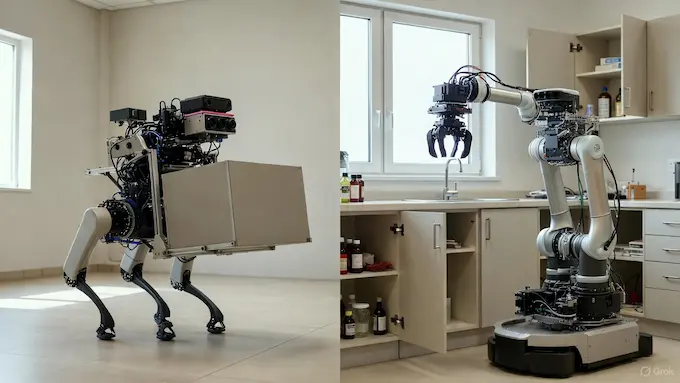
Several research efforts this week point toward a future where embodied AI is both physically sensitive and mentally adaptable. LocoTouch equips quadruped robots with tactile feet so they can feel when unsecured loads slip and adjust their gait instantly, instead of relying solely on pre-programmed motions.
At the same time, SMU’s self-adaptive embodied AI project is teaching robots to rethink tasks when the environment changes updating plans if an object is missing, or adjusting multi-step routines on the fly. Together, these strands suggest the next generation of robots will need both better sensing and better reasoning to operate safely in homes, hospitals and dynamic work sites.
Q1: What is covered in this edition of weekly robotics news?
This edition of weekly robotics news highlights record-breaking humanoid walks, Xpeng’s “Iron” robot plans, funding for humanoid intelligence stacks, new home assistants like Memo, and advances in construction, underwater cleanup and embodied AI research. Together, these stories show how robots are moving rapidly from lab demos into real-world jobs.
Q2: Why are humanoid robots getting so much attention right now?
Humanoid robots can, in theory, use the same tools, spaces and workflows already designed for humans, which makes them attractive for factories, logistics, retail and even home care. Recent field trials, big funding rounds and live demos suggest that major companies now see humanoids as a serious long-term platform, not just science projects.
Q3: How are new home robots like Memo different from traditional robot vacuums?
Traditional robot vacuums mainly handle one task—autonomous cleaning—with limited interaction. New home robots such as Memo combine mobility, articulated arms, computer vision and conversational AI so they can recognise objects, handle fragile items like glasses or plates, and act more like a flexible helper that understands context and instructions.
Q4: What role does AI play in the latest generation of robots?
Modern robots rely on AI at multiple levels: language models to understand natural instructions, vision models to interpret scenes, and control policies that transform decisions into smooth motion. Research into embodied AI and vision-language-action systems is making robots more adaptable, so they can cope with shifting loads, missing objects and cluttered environments instead of failing when something changes.
Q5: How can readers keep up with fast-moving developments in robotics and AI?
A consistent, curated digest helps filter the noise, which is exactly what this column aims to provide. By tracking major product launches, research breakthroughs, funding news and real-world deployments in one place each week, readers can stay informed without having to follow dozens of separate sources or wade through AI-generated headlines on their own.



